
On Saturday afternoon a spaceship came back from fourteen orbits, lit its engines over Texas, and was caught by two arms on the tower it had left 22 hours earlier. The booster, the half SpaceX already knows how to catch, blew up over the Gulf. Watch it anyway.
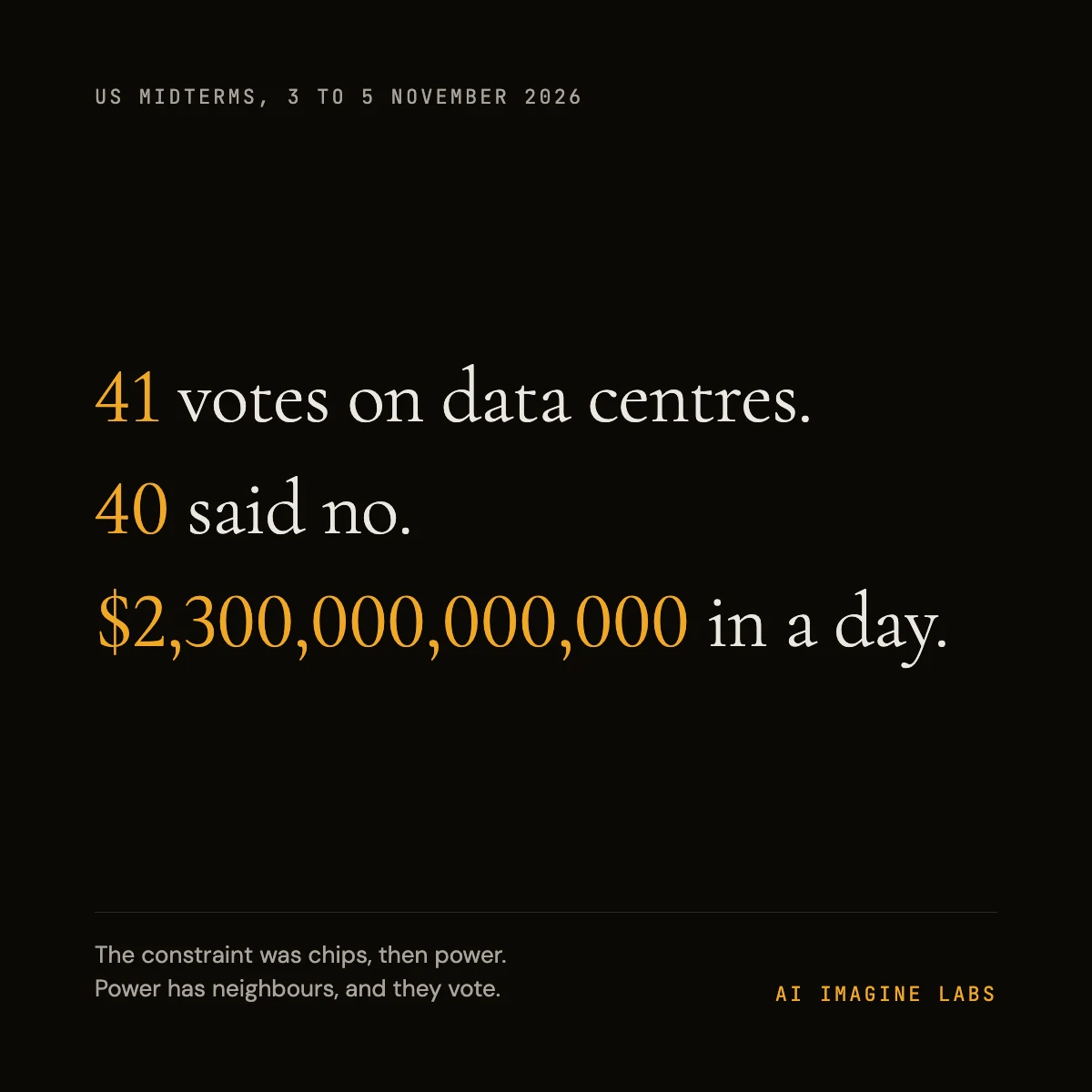
It is in a column about AI because half of SpaceX's revenue last quarter was its AI unit, and because of one post. After voters said no to data centres 40 times in one night, Musk wrote: "Data centers in space looking pretty appealing right now." The plan is older than the vote. SpaceX owns xAI, asked the FCC in January for up to a million satellites from 500 kilometres up, and its prospectus expects the first "as early as 2028". Free sunlight is the brochure. The absence of a planning committee is the pitch.
Read the same prospectus for the small print. A hundred gigawatts a year in orbit means "thousands of launches per year" and a million tonnes to orbit. The satellites "need full Starship reusability to be economically compelling" and, in the risk factors, "may not achieve commercial viability". SpaceX calls the model commercial aviation. An airline needs thousands of flights a year. This one has one landing.
Every data-centre conversation I was in had the same escape hatch: build where nobody would object. It used to mean Ohio. Ohio voted 21 times this month. Now it means orbit, which tells you how the search is going.
Why it's Material. A time story. Saturday has to happen thousands of times a year before the business exists, and by the company's own filing the earliest of those years is 2028.
The Monday move. Take the date in your AI plan. Name the thing that has to happen a thousand times before it, and count how many times it has happened so far. Saturday's count is one.
Monday Morning Mashup No. 146. What moved in AI, every Monday.